
 Español

Six researchers from the IN CSIC-UMH are among the most cited worldwide, according to the Stanford Ranking
22 de October de 2026
A total of 55 scientists affiliated with the Miguel Hernández University (UMH) of Elche have been recognized among the most cited researchers worldwide, according to the ranking compiled by Stanford University and the academic publisher Elsevier, based on data extracted from the Scopus bibliographic database. Six of them belong to the Institute for Neurosciences (IN), a joint center of the Spanish National Research Council (CSIC) and UMH.
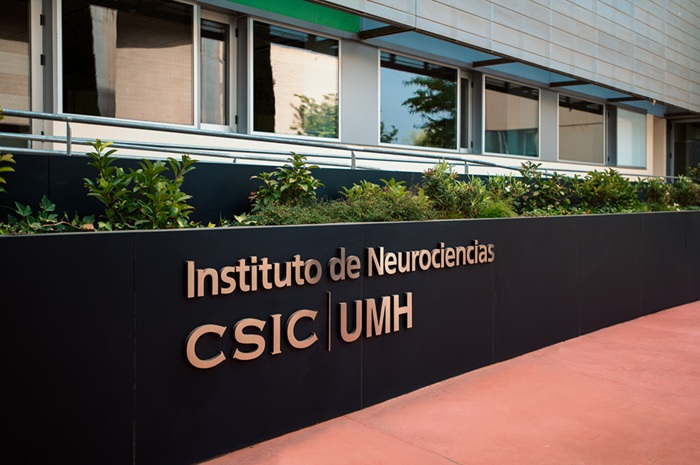
Photo: IN, CSIC-UMH
This international ranking assesses the impact of scientific output using bibliometric indicators. The so-called C-score combines citations received, the h-index, and other indicators that take into account co-authorship and authorship position in publications. The database provides metrics both with and without self-citations, allowing researchers’ impact to be compared within their respective scientific fields.
Inclusion in this ranking represents explicit recognition of the research excellence and academic leadership of those featured on the list, positioning Miguel Hernández University of Elche (UMH) and the Institute for Neurosciences (IN) as international benchmarks across various scientific disciplines.
In the edition published in October 2026, two separate lists have been compiled: one assesses the cumulative impact of researchers’ careers up to 2025, while the other analyses citations received during 2025. The selection includes the 100,000 researchers with the highest C-scores, with or without self-citations, as well as those ranked among the top 2% in their respective scientific subfields.
The six IN researchers, along with their areas of expertise, are listed alphabetically:
Carlos Belmonte (Physiology), founder of the IN in 1990 and professor emeritus at UMH, is a pioneer in the study of ocular sensory physiology. He described the neural mechanisms of pain receptors in the cornea and conjunctiva, fundamental for understanding ocular nociception and conditions such as dry eye.
Víctor Borrell (Developmental Neurobiology), who leads the Neurogénesis and Cortical Expansion laboratory and the Scientific Program on Neural stem cell regulation and differentiation, has demonstrated how neuronal progenitors generate the expansion and folding of the cerebral cortex, unraveling processes that explain human brain evolution and the basis of neurological disorders..
Juan Lerma (Cellular and Systems Neurobiology), director of the Synaptic Physiology laboratory, where he discovered a subtype of glutamate receptors, the kainate receptors, and revealed their role in neuronal communication and synaptic plasticity, key findings for understanding epilepsy, schizophrenia, and other diseases.
Salvador Martínez (Human Anatomy and Embryology), who directs the Neurobiology of Mental, Neurodegenerative, and Neuro-oncological Diseases laboratory. His research has identified brain development alterations associated with psychiatric and neurodegenerative disorders and tumors, providing experimental models for their study and early diagnosis.
Ángela Nieto (Developmental Neurobiology), director of the Cell Plasticity in Development and Disease laboratory and the Scientific Program on Cell Plasticity in Brain Disease and Repair. An international reference in the study of epithelial-mesenchymal transition (EMT), she demonstrated its role not only in embryonic development but also in tumor progression and fibrosis, bridging developmental biology and translational medicine.
Félix Viana (Cellular and Systems Neurobiology), who leads the Sensory Transduction and Nociception laboratory and the Scientific Program on Neurobiology of Pain & Inflammation. He has characterized ion channels involved in detecting thermal and chemical stimuli, revealing sensory transduction mechanisms that generate pain, with implications for developing new analgesics.
The complete list and the methodology used can be consulted at the following link: https://elsevier.digitalcommonsdata.com/datasets/btchxktzyw/9
Source: UMH Communication Service (comunicacion@umh.es)