
 Español
“Master in Neurosciences: from the Bench to the Bedside”
The “Master in Neurosciences: from the bench to the bedside” (MiN) is an official Master of the Universidad Miguel Hernandez (UMH) that is taught in the Institute of Neurosciences, a joint center UMH – CSIC. This Master qualifies to enroll the PhD Program in Neurosciences of the Institute of Neurosciences, an also it gives access to PhD programs in Spain and in countries of the European Higher Education Area (Bologna area).
The master has a total of 60 ECTS (European Credit Transfer System) taught in one academic year (October – July, approximately); the working language of all activities of the Master is English.
Director of the Master: Prof. Emilio Geijo Barrientos
Deputy director of the Master: Prof. Francisco Martini
Master Objective
The main objective of this Master is to provide to recently graduated students the fundamental theoretical and practical formation that will be necessary to follow a PhD program in Neurosciences, and that will be the starting point of a career of research in this wide scientific field.
Student profile

We seek students with a degree in biology/biomedicine related disciplines (Biology, Biomedicine, Medicine, Biochemistry and Molecular Biology, Pharmacy, …) who are planning to initiate a research career in the field of the Neurosciences. Previous laboratory experience in the field of neuroscience (or in related fields) is not required but it will be valued for the admission in the Master.
MASTER TIMETABLE – Academic year 2026-27
The Master’s program is structured around a series of compulsory and elective courses. In addition, it offers students the opportunity to participate in various scientific activities organized at the Institute of Neurosciences.
- 1. Compulsory courses. First term (September – December)
• New developments in the study of the organization of the nervous system and cellular Components of the nervous system (6 ECTS; UMH code 1336).
• Genetic analysis of the nervous system and advances in embryology (6 ECTS; UMH code 1337).
• Cell communication (6 ECTS; UMH code 1339).
• Synaptic transmission and plasticity. Processing of sensory information (6 ECTS; UMH code 4157).
• Animal facilities and tools in Neuroscience (3 ECTS; UMH code 2699). - 2. Compulsory courses. Second term (February – May)
• Functional image analysis (3 ECTS; UMH code 2700).
• Neuropathology (3 ECTS; UMH code 2695).
• New therapies (3 ECTS; UMH code 2697). - 3. Compulsory courses. All academic year (September – May)
• Neuroscience today (4.5 ECTS; UMH code 1335).
• Master research project (15 ECTS; UMH code 2750). - 4. Elective courses (second term February – May)
Each Student must choose one of the following courses:
• From ionic channels to information processing in the Nervous System: a functional approach (4.5 ECTS; UMH code 4158).
• Developmental neurobiology: from neurogenesis to circuit formation (4.5 ECTS; UMH code 2702).

Other scientific activities:
- Scientific conferences, seminars, and meetings organized by the Institute of Neurosciences. Details of these regularly scheduled activities can be found on the IN website
- Participation in events held as part of the Brain Awareness Week (BAW)
- Possibility of obtaining accreditation to work with laboratory animals, depending on course availability.
Applying / Admission
The maximum number of students admitted each academic year is 20.
The steps to apply are as follows (the dates are for applying for the 2026-27 academic year):
To complete a pre-inscription in the Master:
For the academic year 2026-27 the deadline for this pre-inscription will be June 18, 2026. This step is done through the UMH web:
http://estudios.umh.es/acceso/masters/preinscripcion/
This website also provides the publication dates for the list of admitted students and the enrollment period. At this stage, applicants must submit the following documents in PDF format:
a) official academic transcript of the completed degree, including the grade point average (GPA);
b) proof of English proficiency (level B2 or higher);
c) curriculum vitae;
d) statement of purpose. The statement of purpose should outline the applicant’s motivation and interest in the Master’s in Neuroscience, as well as their professional goals.
Optionally, applicants may also include additional documents such as letters of recommendation.
Once the pre-inscription period has closed, admission will be based on the submitted documentation. The list of admitted students will be published on June 30. The selection criteria are as follows:
- 70% of the final score is based on the undergraduate GPA that qualifies the applicant for the Master’s program.
- The remaining 30% is based on: a) prior research experience in fields such as biology, biomedicine, or neuroscience; b) additional training in related areas; c) relevance of the undergraduate degree to the Master’s program; d) interests and motivation expressed in the statement of purpose.
 If you are admitted to the Master’s program, you will receive instructions by email to complete your official enrollment (between July 7 and 10). To enroll, you must have completed the undergraduate degree that qualifies you for the program.
If the maximum number of admitted students (20) is not reached during the first pre-enrollment and enrollment period, a second round will take place in the second half of July. The deadlines for this second period are also detailed at:
http://estudios.umh.es/acceso/masters/preinscripcion/.
Please note that we cannot guarantee the availability of places during this second enrollment period.
Scholarships
There are available fellowships from:
- Fundación Carolina.
https://gestion.fundacioncarolina.es/programas/
- Severo Ochoa Excellence Program:
More information in the following PDF document: Scholarships MIN 2026/2027.pdf
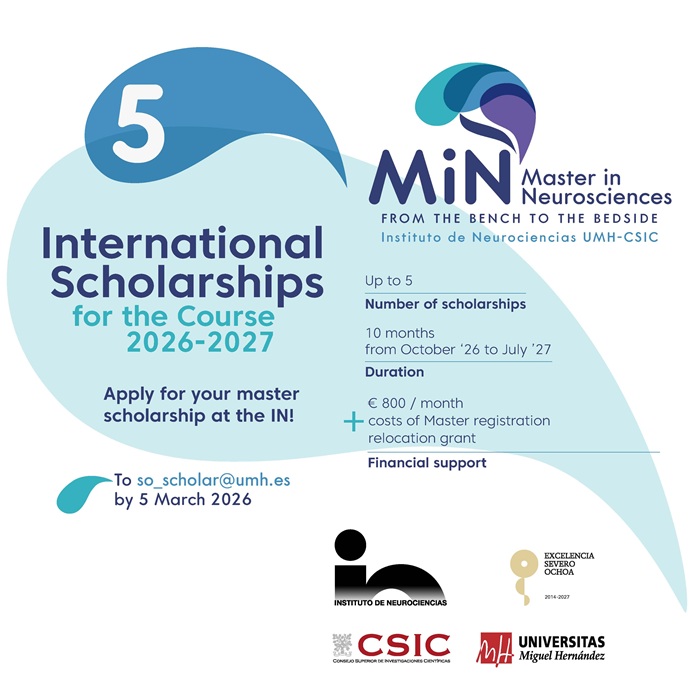
For further information about these fellowships, please ask to: masterneurociencia@goumh.umh.es
Master Research Project / MRP
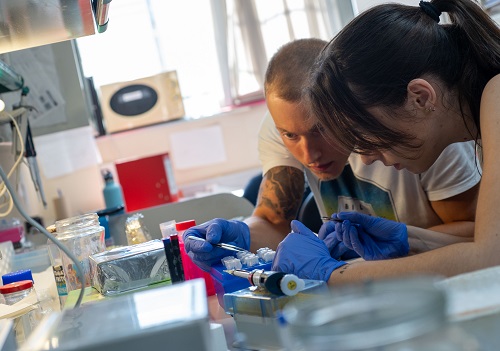
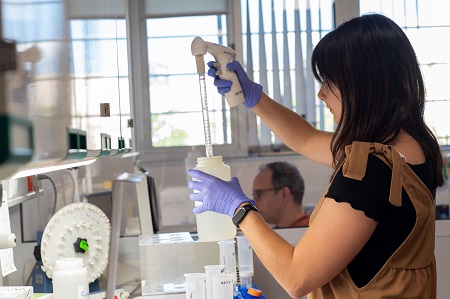
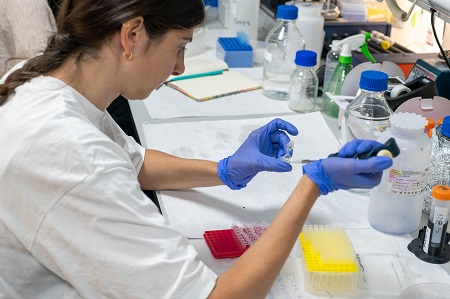 The aim of the Master’s Research Project (MRP) is to carry out original research within one of the research groups at the Institute of Neurosciences (IN). This project is intended to provide students with direct experience in laboratory work in the field of Neuroscience. During the MRP, students are expected to learn some of the techniques commonly used in Neuroscience and to obtain original results, which they must present and defend at the end of the academic year. These results may also serve as the initial phase of a future PhD project.
Proposals for MRP projects offered by research groups of the Institute of Neurosciences for the 2026-2027 academic:
(Follow the link in the title to read the full project description)
- Activity-dependent plasticity in sensory segregation (IP: Guillermina López-Bendito & Francisco J. Martini))
- Cerebellar control of Cortical Maturation (IP: Juan Antonio Moreno Bravo)
- Chemogenetic Manipulation of Microglia During Binge Alcohol Drinking (IP: Pablo Giménez Gómez)
- Circuit control of visual distraction (IP: Andreas Kardamakis)
- Cost-benefit integration in effort-based decision-making (IP: Encarni Marcos)
- Development of an in vitro platform to characterize mammalian nociceptors using optical methods (IP: Felix Viana, Ana Gomis and Elvira de la Peña)
- Dissecting the Genetic Variability in Feeding Decisions (IP: Juan Antonio Sánchez-Alcañiz)
- From Immunity to Mind: Neurobiological Mechanisms Linking Stress, Metabolism, and Cognition (IP: Teresa Femenía Cantó)
- Functional sensitization of MrgprD+ nociceptors in oxaliplatin-induced neuropathy (IP: Felix Viana, Ana Gomis and Elvira de la Peña)
- High resolution imaging of secretory and endolysosomal traffic in muscles (IP: José C. Pastor Pareja)
- How neurons know who they are and stay that way (IP: Eduardo Leyva)
- Immersive platform for the study of Attention and Distraction (IP: Andreas Kardamakis)
- Impact of Aging in Social Behavior (IP: Sandra Jurado)
- Interrupting perception: temporal gaps and the dynamics of evidence accumulation (IP: Encarni Marcos)
- miRNA control of neuronal subtype specification in the developing spinal cord (IP: Augusto Escalante)
- Modelling Oxaliplatin-Induced Peripheral Neuropathy in Human iPSC-Derived Sensory Neurons: Excitability and Pharmacological Modulation (IP: Felix Viana, Ana Gomis and Elvira de la Peña)
- Molecular biomarkers associated with stress-related disorders: insights from human brain studies (IP: María Salud García Gutiérrez)
- Multi-omic analysis of activity-dependent gene expression in hippocampal neurons (IP: Angel Barco)
- NALCN function in oligodendrocyte precursor cells (IP: Isabel del Pino, Alerie Guzmán)
- Neural regulation of brain tumours (IP: Berta López Sánchez-Laorden)
- Neuroendocrine control of organ growth and sexual maturation (IP: Javier Morante)
- Psychosis in Alzheimer’ disease (IP: Jose V Sanchez Mut & Jorge Brotons Mas)
- Regulation of glycosylation of proteins (IP:Inmaculada Cuchillo Ibáñez)
- Sex-specific pharmacological modulation of PTSD-like alterations in a mouse model (IP: María Salud García Gutiérrez)
- Thalamocortical loop dysfunction and recovery in a mouse model of developmental dyslexia (IP: Guillermina López Bendito)
- Understanding the role of sexual hormones in defining healthy ageing trajectories of brain microstructure (IP: Silvia de Santis)
Student exchange programs
The Master’s program has an international agreement with the Institut Pasteur/Sorbonne Université (Paris) for a student exchange program. This program includes participation in the Development and Plasticity of the Nervous System (DPSN) course at the Institut Pasteur for one week.
» English link Institut Pasteur
» French link Institut Pasteur
To request more information and make inquiries, please contact the following address: