
 Español
More than 1,200 researchers from over 40 countries gather in Valencia for the international ISER 2026 congress
1 de September de 2026
- The Ocular Neurobiology and Generation and Regeneration of Bilateral Neural Circuits groups at the Institute for Neuroscience CSIC-UMH have played an active role in the meeting, both scientifically and organisationally.
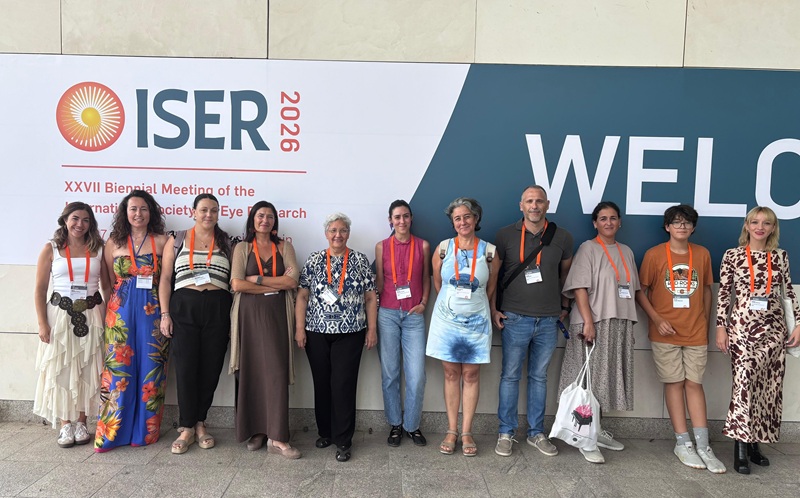
Delegation from the Institute for Neuroscience attending the XXVII Biennial Meeting of the International Society for Eye Research (ISER 2026). Source: IN UMH-CSIC.
The XXVII Biennial Meeting of the International Society for Eye Research (ISER 2026), one of the leading international meetings dedicated to research on vision and eye diseases, brought together more than 1,200 researchers and professionals from over 40 countries in Valencia from 23 to 27 August. Over five days, scientists and specialists from different fields shared the latest advances in basic, clinical and translational research. The next edition will take place in Singapore.
This year's edition stood out for its international scope and the breadth of its scientific programme, with a total of 1,004 oral presentations distributed across the different parallel sessions and lectures. In addition, the organisers awarded 61 travel grants to facilitate the participation of early-career researchers.
In this context, the Institute for Neuroscience, a joint centre of Miguel Hernández University of Elche (UMH) and the Spanish National Research Council (CSIC), participated through its Ocular Neurobiology and Generation and Regeneration of Bilateral Circuits research groups, as well as in sessions dedicated to innovation, science communication and knowledge transfer. UMH co-organised the meeting together with the International Society for Eye Research.
From the ocular surface to pain
The Ocular Neurobiology group had a prominent presence at ISER 2026, presenting research on corneal nerves, the alterations associated with injury and inflammation, and new therapeutic strategies to combat pain and promote regeneration.
The group's participation began with a presentation by Mª Carmen Acosta in a session dedicated to the cornea and ocular surface. Her presentation addressed the functioning of corneal nerves under normal conditions, following injury and during inflammation, as well as their role in sensory perception and in protective mechanisms of the eye, such as blinking and tearing.
The researcher also participated as chair of a session dedicated to advancing new treatments for rare eye diseases in Europe, linked to the European project Restore Vision. These diseases can cause significant vision loss and, in many cases, still have limited therapeutic options.
During the same session, researcher Almudena Íñigo Portugués presented research on the ability of different treatments to promote the recovery of corneal nerves after injury. The study evaluates both the regeneration of these fibres and the recovery of their functions, with the aim of identifying potential therapeutic strategies.
Corneal nerve regeneration was once again at the centre of a session dedicated to novel neurotrophic therapies, in which researcher Laura Frutos Rincón played a dual role as chair and speaker. Her presentation addressed different factors capable of promoting nerve recovery and the importance of assessing, in addition to their regenerative potential, their possible effects on ocular sensitivity and pain.
The group's participation continued in a session focused on the cellular mechanisms involved in ocular surface pain. Researchers Víctor Meseguer and Ariadna Díaz-Tahoces participated as chairs of this session, which explored the role of ion channels—structures present in cells that are involved in the detection and transmission of stimuli—in processes related to ocular discomfort and pain.
As part of this session, Meseguer presented research on the changes that inflammation can cause in corneal nerve endings and their relationship with alterations in ocular sensitivity. Díaz-Tahoces, meanwhile, presented research focused on the changes associated with ageing in the mechanisms responsible for detecting temperature and other stimuli on the ocular surface.
Building the connections between the eye and the brain
The Generation and Regeneration of Bilateral Neural Circuits group, led by researcher Eloísa Herrera, was also represented in the scientific programme of ISER 2026. Herrera served as chair of the session From the Eye to the Brain: Wiring the Visual Pathway, which focused on the mechanisms guiding the formation, organisation and maturation of the connections between the eye and the brain, as well as on new strategies to promote their regeneration. She also contributed to the scientific organisation of the meeting as the organiser responsible for the Retinal Neuroscience and Development section.
From basic research to society: innovation and knowledge transfer
The participation of the Institute for Neuroscience and Miguel Hernández University of Elche was also prominent in the session The Ocular Innovation Roadmap: Bridging Research, Industry, and Society Through Strategic Communication, chaired by Ariadna Díaz-Tahoces and Víctor Meseguer.
In this context, Juana Gallar, Professor of Physiology at UMH and Director of the IN UMH-CSIC, explained the stages a scientific discovery must go through before becoming a treatment, from basic and preclinical research to clinical trials and its incorporation into the healthcare system.
Meanwhile, Elena Garrido Huarte, Press Officer at the IN UMH-CSIC, addressed how scientific innovation can be translated into social value, highlighting the need for its potential benefits to be supported by evidence, but also understood and recognised by the different actors in society.
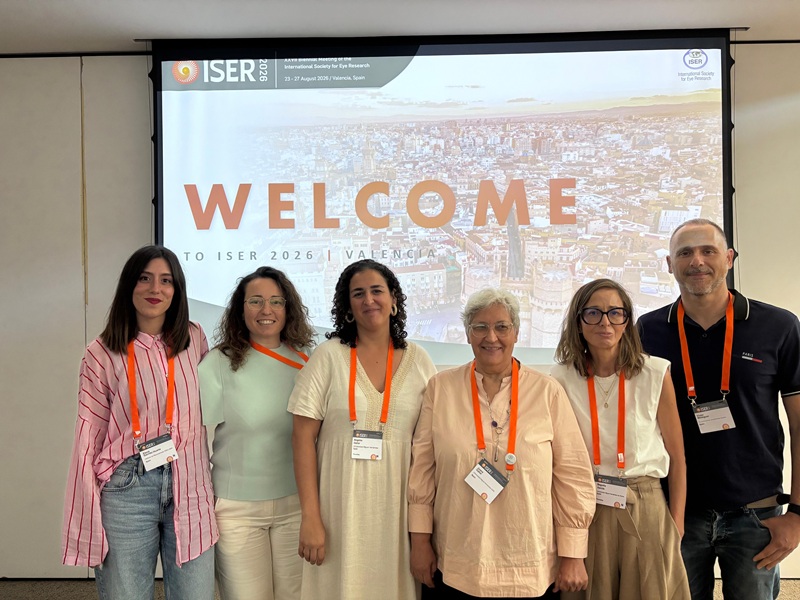
Speakers and chairs of the sesión The Ocular Innovation Roadmap. Source: IN UMH-CSIC
Ángeles Gallar, science communication expert at UMH's Unit for Scientific Culture and Innovation, focused her presentation on the role of institutions and communication in shaping social expectations around new technologies, and on the importance of adapting narratives to the level of maturity and the real potential for application of each advance.
Finally, Begoña García Jaén, from UMH's Knowledge Transfer Service, explained the mechanisms for protecting and transferring research results, from the identification of new developments and the management of intellectual property to their transfer to industry and society.
Source: Institute for Neurosciences UMH-CSIC (in.comunicacion@umh.es)