
 Español
Immune pathway identified that may contribute to women’s greater vulnerability to Alzheimer’s disease
14 de July de 2026
- The study, led by the Institute for Neurosciences CSIC-UMH, shows in experimental models that blocking this pathway reduces neuroinflammation, alleviates brain alterations and improves performance in memory tests.
- The findings highlight the importance of considering sex as a biological variable to better understand Alzheimer's disease and develop new therapeutic strategies.
Video Youtube: https://youtu.be/5xALFzhOS7k
Alzheimer's disease affects approximately twice as many women as men. Although women's longer life expectancy partly explains this difference, growing evidence suggests that biological mechanisms also increase women's susceptibility to developing the disease. Now, a study led by the Institute for Neurosciences (IN), a joint research centre of the Spanish National Research Council (CSIC) and Miguel Hernández University of Elche (UMH), has identified an immune pathway known as interferon signaling that may contribute to this increased vulnerability. The findings, published in the Journal of Neuroinflammation, open new avenues for the development of future therapeutic strategies aimed at modulating this immune response.

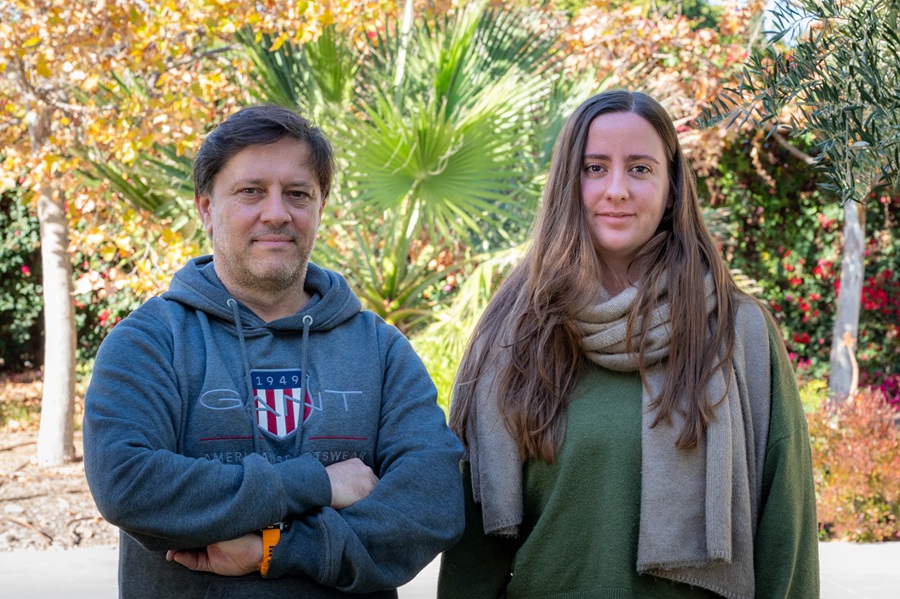
IN CSIC-UMH researchers Alejandro Expósito, Andrea Torres, José P. López-Atalaya, Violeta Durán, Marina Guillot and Gerard Iniesta.
Interferon signaling is one of the immune system's main defence mechanisms against viral infections. However, when this response becomes chronically activated, it can promote inflammatory processes that are harmful to the brain. In this context, researchers from the Cellular Plasticity and Neuropathology laboratory at IN CSIC-UMH identified a stronger activation of this immune pathway in women with Alzheimer's disease, which may help explain their greater vulnerability to the condition.
The study identifies one of the biological mechanisms that may contribute to this sex difference. “We knew that women develop Alzheimer's disease more frequently than men, but the biological mechanisms underlying this difference remained unclear. Our findings show that the interferon response is much more strongly activated in women with Alzheimer's disease and that this excessive activation may contribute to both brain alterations and cognitive decline”, explains José P. López-Atalaya, who led the study.
A different immune response
 To reach this conclusion, the team analysed post-mortem brain tissue samples from patients with Alzheimer's disease and found that genes associated with the interferon response were significantly more active in women than in men, even when both groups showed a similar degree of brain pathology.
The researchers then confirmed the same pattern in a mouse model of the disease, where female mice exhibited a stronger interferon response than males, together with increased brain inflammation and alterations in several markers associated with neuronal damage.
The study combined transcriptomic analyses of human brain tissue with animal models and single-cell RNA sequencing, allowing the researchers to identify microglia—the brain's resident immune cells—as a major interferon-responsive cell population. Although microglia play a crucial role in protecting the nervous system, persistent interferon signalling in these cells can promote inflammatory processes that disrupt neuronal function. “Our findings reinforce the idea that neuroinflammation plays a central role in the progression of Alzheimer's disease”, says Verónica López López, first author of the study.
 Brain image from a mouse model of Alzheimer's disease showing microglia (red) surrounding amyloid plaques (green). The study identifies microglia as a major interferon-responsive cell population. Cell nuclei are shown in blue. Source: IN CSIC-UMH
A potential therapeutic target
The researchers next sought to determine whether interferon signaling is simply a consequence of Alzheimer's disease or whether it actively contributes to disease progression. Using a range of experimental approaches, they showed that activating this immune response alone was sufficient to trigger Alzheimer’s disease-like neuropathological alterations, including brain inflammation and impairment of memory-related neural circuits.
The team also found that specifically enhancing interferon signaling in microglia worsened neuroinflammatory and neurodegenerative changes. Conversely, pharmacological inhibition of STING, a key protein involved in interferon activation, reduced neuroinflammation, alleviated neuropathological alterations, and improved spatial memory performance in female mice in the Alzheimer's disease model.
The authors emphasise that these findings were obtained primarily in animal models and that future clinical studies will be needed to determine whether this approach can be translated to patients. Nevertheless, they believe the results provide further evidence supporting an emerging line of research. “Our findings support the idea that pharmacologically modulating interferon signaling could become a strategy to reduce neuroinflammation and preserve brain function in Alzheimer's disease”, concludes López-Atalaya.
The study also involved researchers José Vicente Sánchez Mut and Ángel Barco from IN CSIC-UMH, the research group led by Albert Giralt at the University of Barcelona, and researcher José Luis Venero from the University of Seville and the Institute of Biomedicine of Seville (IBiS).
The research was funded by the Spanish State Research Agency (Ministry of Science, Innovation and Universities), the Severo Ochoa Programme for Centres of Excellence at the Institute for Neurosciences CSIC-UMH, the PROMETEO programme of the Valencian Government (Generalitat Valenciana), the Tatiana Pérez de Guzmán el Bueno Foundation, the Ramón Areces Foundation, the ”la Caixa” Foundation and the Pasqual Maragall Foundation.
Source: Institute for Neurosciences CSIC-UMH (in.comunicacion@umh.es)
"Sex-dependent interferon signaling contributes to female-biased vulnerability in Alzheimer’s disease." López-López V, Iniesta G, Galán-Ganga M, Expósito-Coca A, Durán-Laforet V, Bhojwani-Cabrera AM, Navarrón CM, Guillot-Fernández M, Venero JL, Sánchez-Mut JV, Barco A, Giralt A & López-Atalaya JP. Journal of Neuroinflammation 23, 217 (2026)