
 Español
The Institute for Neurosciences CSIC – UMH receives more than €3.1 million in the 2024 National Knowledge Generation call
28 de January de 2026
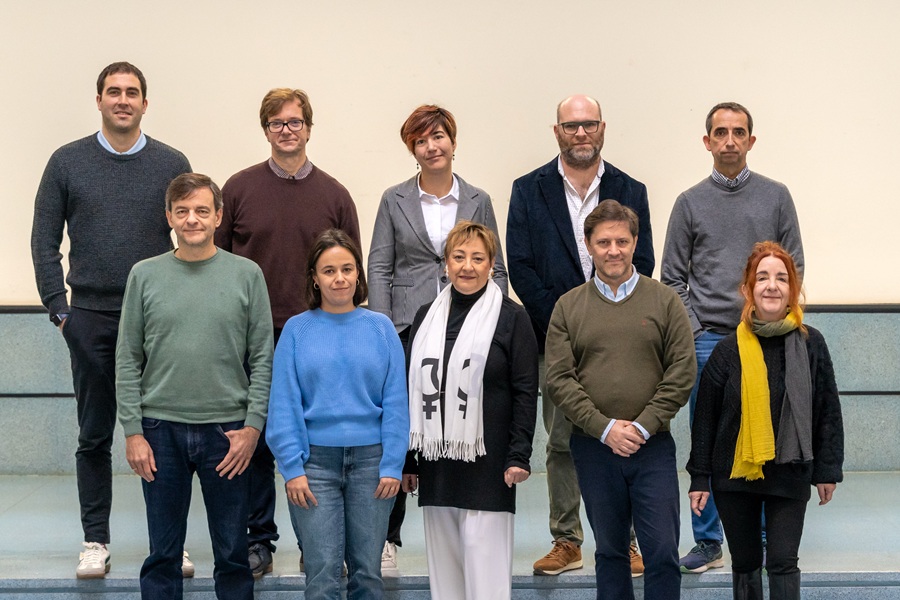
Part of the IN CSIC-UMH research team leading projects funded under the 2024 Knowledge Generation call. From left to right, top to bottom: Javier Aguilera, Ramón Reig, Alerie Guzmán, Khalil Kass Youssef, Víctor Borrell, Santiago Canals, Mª Salud García, Ángela Nieto, José P. López Atalaya, and Ana Carmena. Source: IN CSIC-UMH.
The Institute for Neurosciences (IN), a joint centre of the Spanish National Research Council (CSIC) and Miguel Hernández University of Elche (UMH), has secured €3,199,875 in funding for the development of 11 research projects under the 2024 Knowledge Generation call of the Ministry of Science, Innovation and Universities, one of the main competitive programmes within Spain’s R&D system. With these new grants, the IN currently has 33 active projects funded under the State R&D&I Plan, reflecting the strength and continuity of its scientific activity.
The funded research focuses on the basic and pathological mechanisms of the nervous system. The projects range from cortical development and memory formation to multiple sclerosis, the origin, progression, and innervation of cancer, gut neuroimmunology, advanced neuromodulation, and rare neuropathological disorders, including the identification of biomarkers with diagnostic and therapeutic potential. Furthermore, the funding will allow the consolidation of emerging research groups, the launch of new lines of investigation, the strengthening of knowledge transfer, and the training of four predoctoral researchers, ensuring the continuity and impact of the IN’s scientific activity.
Cutting-edge research on the nervous system
Researcher Guillermina López Bendito leads the project ‘Interaction between Spontaneous Activity and Genetic Programs in Cortical Organization of Sensory Modalities’. Over three years, her team will investigate how the cerebral cortex organizes into specific functional areas through the interplay between genetic programs and spontaneous neuronal activity, even before birth. Using advanced transcriptomic and neuronal imaging techniques, the project aims to elucidate how these mechanisms shape cortical identity and sensory processing, with potential implications for addressing neurodevelopmental disorders that affect sensory function.
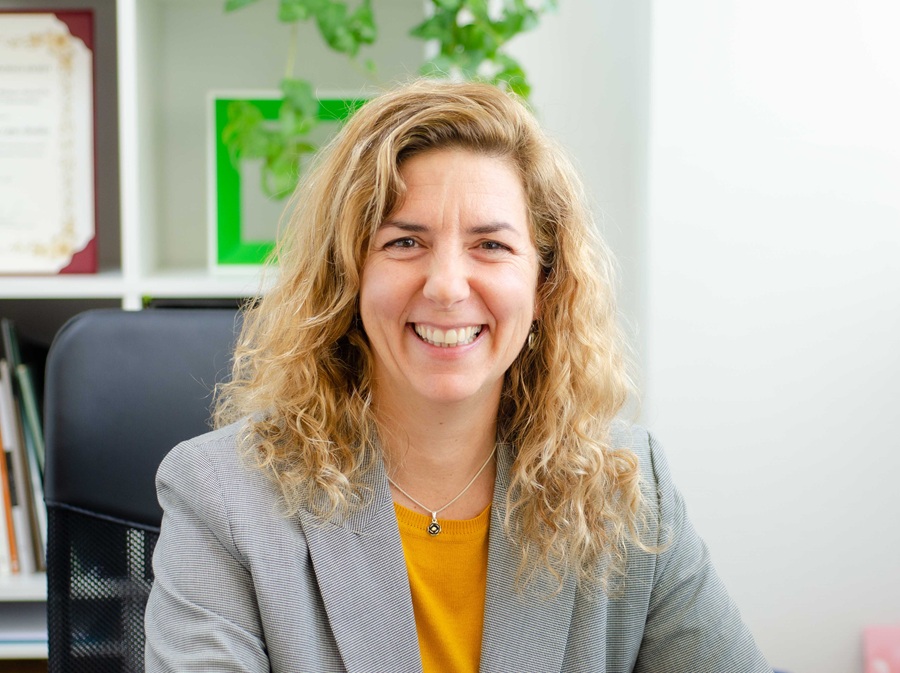
Researcher Guillermina López Bendito in her office at the Institute for Neurosciences.
Over three years, researcher Ángela Nieto will lead the project “Interactome and Cellular Plasticity in Tumor Evolution and Metastatic Potential.” Her team will study how tumor cells change and adapt, and how they interact with their microenvironment, to understand why some tumors become more aggressive and acquire metastatic capacity. Developed in collaboration with the MD Anderson Cancer Center Spain Foundation, the project aims to identify which tumors are at higher risk and which may respond better to treatment, to develop strategies to block metastasis, increase tumor vulnerability to the immune system, and ultimately improve patients’ survival and quality of life.
Researcher Ana Carmena de la Cruz leads the project ‘Asymmetric Cell Division in Nervous System Development and Tumorigenesis: Redundancy and Cell Competition’. Over three years, her team will study how stem cells in the central nervous system divide asymmetrically to generate cellular diversity and maintain tissue homeostasis, and how errors in this process can promote tumor formation. Specifically, the project will examine whether such errors can trigger mechanisms of cell competition that may either limit or favour tumor growth, thereby contributing to a deeper understanding of cancer biology and the development of potential therapeutic strategies.
Over four years, researcher Javier Aguilera will lead the project ‘Study of Intestinal Paracellular Pathways and Mucosal Neuroimmune Interactions in Constipation’. The project aims to investigate the mechanisms underlying chronic constipation and abdominal pain by analysing how the intestinal barrier is disrupted and how the nervous and immune systems interact. The project will combine experimental models and patient samples to identify key factors and lay the groundwork for new non-surgical treatments. The research is carried out in collaboration with the Digestive Diseases Unit of Dr. Balmis University General Hospital–Alicante Health and Biomedical Research Institute (ISABIAL), and the Flemish Institute for Biotechnology (VIB, Belgium).
Researcher Alerie Guzmán de la Fuente leads the project ‘Epigenetic Inflammatory Memory of OPCs in Multiple Sclerosis: A Double-Edged Sword in Aging and Remyelination’. Over three years, her team will study how oligodendrocyte progenitor cells (OPCs) retain a memory of previous inflammatory events through epigenetic modifications, and how this “memory” can either promote or hinder myelin regeneration in the central nervous system. This research aims to elucidate the molecular mechanisms that regulate inflammatory memory and its impact on the progression of multiple sclerosis, laying the groundwork for future therapeutic strategies to modulate inflammation and promote remyelination.
Over three years, researcher Santiago Canals Gamoneda will lead the project ‘Temporal Interference and Digitally Enhanced Neuromodulation to Improve Memory Formation: An Experimental Perspective’. His team will develop innovative neuromodulation strategies to enhance memory formation in animal models, combining experimental and computational approaches. The project will employ an advanced technique to selectively stimulate deep brain regions and will use digital brain models to personalize stimulation and adapt it to each individual. Coordinated with the IFISC in Palma de Mallorca, the research has potential implications for the treatment of neurological and psychiatric disorders and could lay the groundwork for future translational applications in humans.
Researcher Khalil Kass Youssef leads the project ‘Neuronal Control of Epithelial Tissues: The Role of Sympathetic Innervation in Mammary Gland Homeostasis and Breast Cancer’. Over three years, his team will study how the nervous system communicates with epithelial cells to regulate their behavior, plasticity, and vulnerability to disease. The project aims to elucidate this neuroepithelial dialogue to uncover new mechanisms of tissue regeneration and maintenance, with potential applications for reducing risk and improving the treatment of degenerative diseases and various types of cancer.
Durante tres años, el investigador Víctor Borrell liderará el proyecto ‘Generando nuevos tipos celulares del cerebro mediante genómica evolutiva’. El equipo de Borrell estudiará cómo la diversidad de células madre neurales ha permitido la aparición de nuevos tipos celulares en la corteza cerebral a lo largo de la evolución. El proyecto combina modelos animales estratégicos, desde reptiles hasta mamíferos, y técnicas genómicas avanzadas para identificar los mecanismos que generaron esta diversidad, proporcionando claves sobre cómo se formaron tejidos complejos, incluido el cerebro humano.
Researcher Ramón Reig leads the project ‘Beyond the Midline Fusion Theory in the Mouse Vibrissal System’. Over three years, his team will study how the brain processes tactile information arriving from both sides of the body, using the mouse whisker system as a model. The project seeks to understand why certain neurons receive and “copy” signals from both sides of the snout via the corpus callosum, and what functional advantages this mechanism provides during exploration, revealing how different types of neurons contribute to tactile communication between the two cerebral hemispheres.
Over three years, researcher José P. López-Atalaya will lead the project ‘Neuropathological Mechanisms in Type I Interferonopathy Caused by RELA Mutations’. His team will study this rare autoinflammatory disease in which the immune system remains chronically activated, leading to inflammation and neurological damage. The project will analyze how these mutations affect immune cells in the brain and the cerebral vasculature, and will evaluate potential strategies to counteract their effects on neuronal circuits, to advance towards therapeutic interventions that preserve or restore neurological function in patients.
Researcher Mª Salud García Gutiérrez, together with researcher Jorge Manzanares, leads the project ‘Identification of Biomarkers as Prognostic Predictors and Therapeutic Guides, and New Pharmacological Treatments in Post-Traumatic Stress Disorder’. The project will run for four years and involves collaboration with researchers from Hospital 12 de Octubre and the Central Defence Hospital Gómez Ulla. The team will study post-traumatic stress disorder (PTSD) to advance towards more personalized treatments, analyzing biological samples from patients to identify markers that can predict response to therapies. The research will combine clinical studies with experimental models and will evaluate new pharmacological strategies, contributing to improved therapeutic approaches for a disorder with a high personal and social impact.
The grants have been awarded by the Spanish State Research Agency, within the framework of the State Programme for Research and Experimental Development of the 2024–2027 State Plan for Scientific, Technical and Innovation Research, with European co-funding through the European Regional Development Fund (ERDF) and the European Social Fund Plus (ESF+).
Source: Institute for Neurosciences CSIC-UMH (in.comunicacion@umh.es) / UMH Communication Service (comunicacion@umh.es)